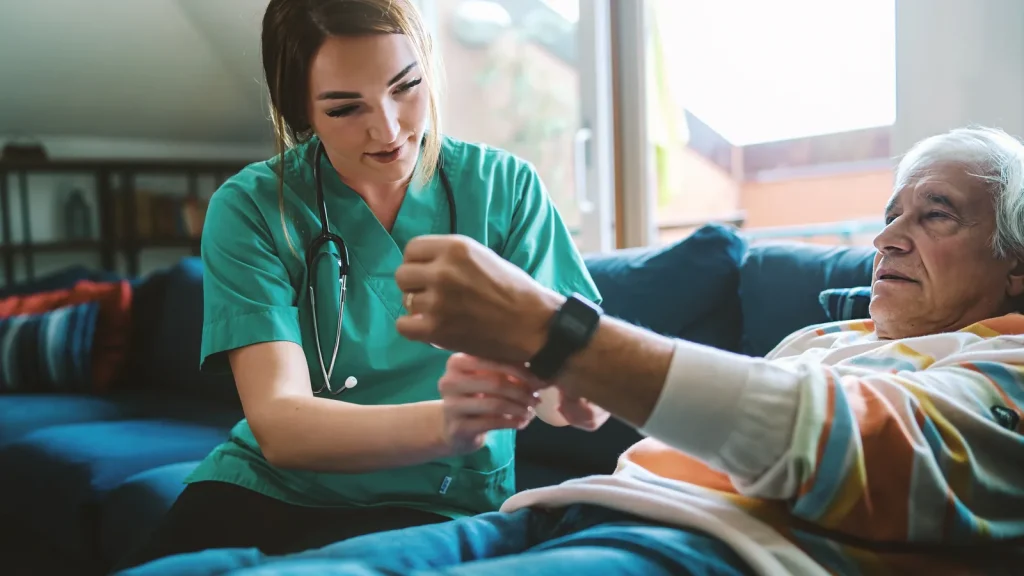
24-hour patient monitoring at home: how it can help
24-hour patient monitoring at home does not mean that every problem can be prevented or solved immediately. However, it means that the patient is not left alone for long periods and that there is a continuous presence for basic care, observation, and timely updates to the family or treating doctor when needed.
It can be useful for patients who have recently returned from hospital, older people at an increased risk of falls, individuals with severe weakness, reduced mobility, or those needing assistance with transfers, feeding, toileting, and personal hygiene. It can also help when the family observes confusion, anxiety, behavioural changes, or when the patient has difficulty following instructions.
Continuous presence should not be presented as a guarantee of safety. Falls, infections, deterioration of a chronic condition, or the onset of confusion can occur even with care. The value of monitoring lies primarily in systematic observation: whether the patient is eating and drinking, if they stand up safely, how they sleep, whether their breathing changes, or if they have a fever, pain, or signs of deterioration.
In many instances, 24-hour care also helps the family. Relatives often try to cover needs day and night, resulting in exhaustion, anxiety, and errors due to fatigue. The organised presence of a carer or nurse can offer practical support, especially when the patient requires help for every movement or wakes frequently during the night.
It is important to agree from the outset on what the monitoring entails. A patient who primarily needs help with daily living has different needs from one who requires nursing tasks, such as monitoring vital signs, wound care, or communication with a doctor. The family must provide clear information about diagnoses, medications, allergies, mobility restrictions, and instructions provided by the hospital.
24-hour monitoring can be temporary, for a few days after hospitalisation, or longer-term when the patient's condition requires it. It does not replace medical assessment, nor is it a suitable solution for every case. If severe symptoms occur, such as shortness of breath, chest pain, loss of consciousness, heavy bleeding, or sudden neurological changes, immediate medical help is required.
The correct decision is based on the patient's actual needs, home safety, and the family's capacity to support care without becoming exhausted.
A 24-hour presence can be particularly useful when the patient cannot easily call for help, gets up at night with a risk of falling, experiences confusion, or requires frequent assistance with positioning, hygiene, and following instructions. It does not mean that a medical procedure must take place every hour. It means there is continuous human supervision and an organised response to basic needs. The family must clarify beforehand what the service includes, who is informed of changes, and which incidents require immediate medical attention. In this way, monitoring serves as support for safety and consistency, not as a promise that complications will not occur.
It is of particular value when needs change during the day and are not easily predicted. A stable presence allows better continuity of care, quicker recognition of changes, and a calmer daily routine for relatives who cannot be constantly at home.